Marriage as a Moral Partnership
The Tenant of Wildfell HallMarriage as a Moral Partnership is the ethical standard Helen brings to her marriage with Arthur Huntingdon, and the measure by which she exposes its collapse. For her, marriage does not excuse betrayal or grant a husband absolute command: it creates reciprocal duties of fidelity, honesty, and regard. Her insistence on those duties becomes a form of moral resistance, even as Arthur’s control over their household and their child makes it difficult for her to act on her convictions.
Mutual Fidelity and Accountability
When Helen challenges Arthur over his conduct with Annabella, she rejects his attempt to dismiss it as inconsequential. She asks him to consider how he would judge the same behavior if Lord Lowborough had treated Helen as Arthur treated Annabella. Arthur answers that he would kill a man who did so; Helen uses his response to show the double standard in his defense. Conduct he would regard as intolerable when directed against himself, she argues, cannot become harmless merely because he is the one committing it.
Helen’s objection extends beyond her own feelings. She frames Arthur’s actions as a violation of the marriage vows and as a betrayal of Lord Lowborough, whose trust he has also disregarded. Arthur’s pursuit of another man’s wife, she maintains, wrongs both his friend and his own wife; it cannot be defended as private amusement. Her argument makes fidelity a shared moral obligation rather than a privilege reserved for the husband to enforce.
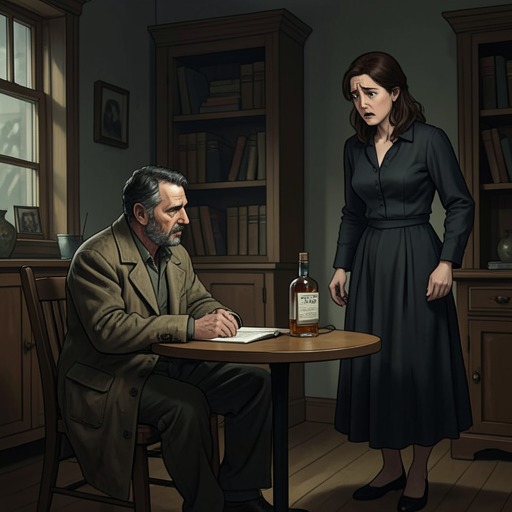
Arthur counters by accusing Helen of breaking her vows to honor and obey him. He treats her criticism as insubordination and declares that he will not be dictated to by a woman, even his wife. This exchange makes their incompatible ideas of marriage explicit: Helen claims the right to judge conduct by a common ethical standard, while Arthur invokes her submission to shield himself from judgment. The partnership she advocates is therefore not simply damaged by infidelity; it is denied by his insistence that marital authority runs in only one direction.
Speaking Against Harm
Helen’s understanding of marital responsibility also informs her response to Arthur’s broader conduct. When he suggests that misconduct matters little if he harms only himself, she objects that such actions injure those connected to him, especially his wife. His self-indulgence cannot be sealed off from domestic life: its consequences reach beyond the person who chooses it. In this way, she treats marriage as an interdependence that carries obligations, not as a private arrangement in which one spouse may disregard the other’s welfare.
That interdependence does not mean Helen promises to keep silent. She tells Arthur that she will not contradict him without cause, but will make her judgment known when she believes his conduct deserves criticism. If he oppresses her in body, mind, or estate, she says, he will not be allowed to assume that she does not care. Her position is neither unreasoned opposition nor passive obedience: it is a claim to speak plainly within a relationship whose obligations Arthur expects to impose on her but refuses to accept for himself.
The Limits of Partnership in Practice
The conflict becomes material when Helen asks to take their child and what remains of her fortune and leave. Arthur refuses. He will not let her go with the child, and will not let her leave without him; he says he will not be made the subject of public talk because of her scruples. Helen concludes that they will henceforth be husband and wife in name only. Her declaration describes the emotional and moral separation already established between them, but it cannot by itself secure the freedom she seeks.
Money and care make the unequal circumstances of the marriage concrete. Helen explains that she entrusts important responsibility for the child to Rachel, who has nursed her and wants to care for the child, with a young nursery-maid working under Rachel’s direction. Rachel’s trustworthiness matters, but so does economy: Helen has learned to treat saving money as important after discovering Arthur’s financial affairs, and devotes nearly all the income from her fortune for years ahead. The practical management of the household and her resources thus falls to Helen even as Arthur asserts control over whether she can leave with their child.
Later, when Arthur discovers Helen’s writings, he demands the keys to her cabinet, desk, drawers, and other possessions. The demand shows his attempt to extend marital authority into the private spaces where she keeps her work and papers. In the planning and execution of her escape, Helen also keeps her refuge secret so that her brother and uncle can truthfully deny knowing where she is; communications sent to her under cover to her brother can still reach her. The contrast is central to the ideal of partnership: Helen seeks practical support and a way to protect her child, while secrecy becomes necessary because she cannot rely on Arthur’s consent.
Moral Commitment Beyond Marriage
Helen’s view of obligation also shapes her response to Gilbert Markham’s hope that she will marry him after Arthur’s death. She refuses to make their future rest on another person’s death, arguing that it would be wrong to treat Arthur’s possible improvement as a loss to her own prospects. She also challenges the practical fantasy of waiting indefinitely: Arthur might live many more years, leaving Gilbert to spend the prime of his life in uncertainty and to marry, if at all, a woman worn by sorrow. Her refusal separates moral responsibility from romantic desire; even the possibility of a happier marriage cannot make another person’s decline an acceptable benefit.
The ideal of marriage as moral partnership is consequently both a standard and a point of conflict. Helen’s expectation of reciprocal fidelity and truthful accountability reveals what is missing in her union with Arthur, while her attempts to leave show that moral judgment alone cannot overcome the control he exercises over the child and household. The novel’s treatment of partnership is therefore inseparable from women’s agency: a marriage cannot be ethically mutual when one spouse claims obedience but disavows the duties that should bind them both.